

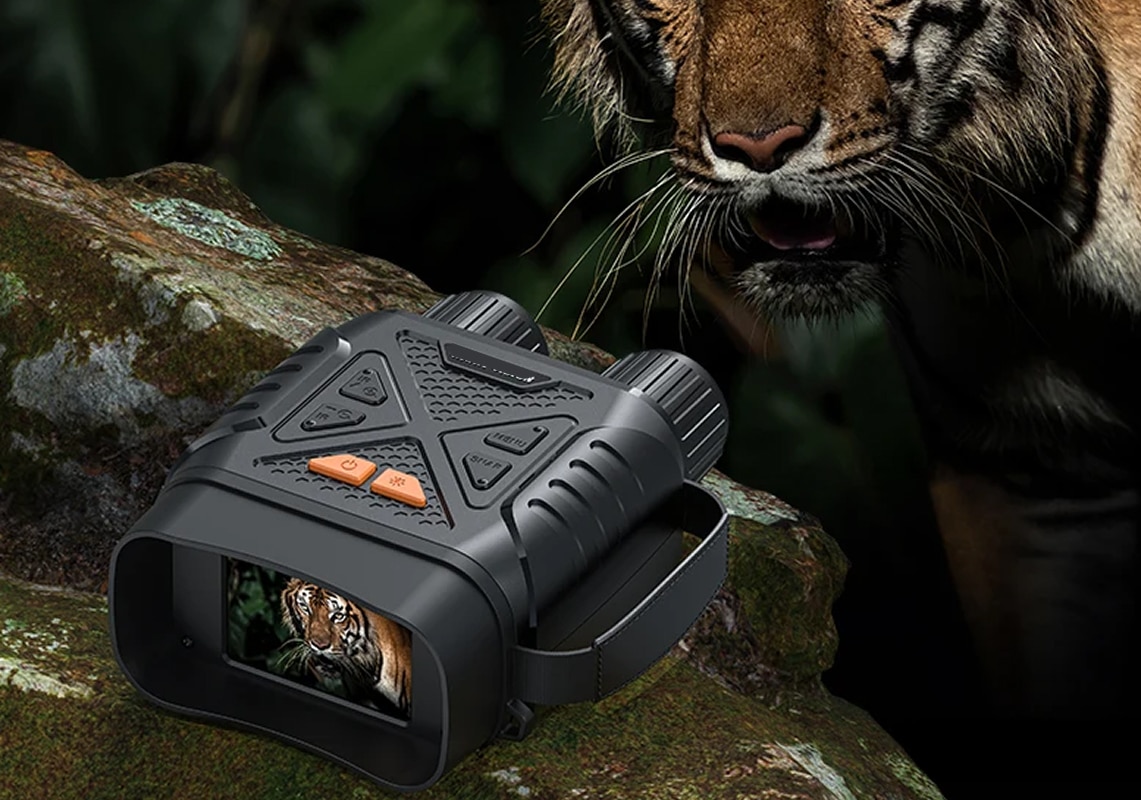
Have you ever missed that perfect wildlife sighting because darkness fell too quickly? 🌙 I still remember the frustration of losing track of a magnificent stag in Scotland because my standard binoculars became useless as dusk settled. Thermal binoculars have revolutionised how we experience the outdoors after sunset.
Selecting the right thermal binoculars can be overwhelmingly technical—balancing detection range, battery life, image quality, and durability while navigating confusing jargon and significant price differences. Many outdoor enthusiasts waste hundreds of pounds on devices that fail during critical moments or deliver disappointing performance.
This comprehensive guide examines the best 5 thermal binoculars available today, tested in real wilderness conditions. I've spent countless nights in fields and forests, evaluating each model's performance in complete darkness, fog, and rain to save you from expensive disappointments. 🔍
From wildlife observation to security applications, these advanced optical tools offer capabilities that seemed impossible just years ago. Let's explore the thermal imaging technology that's transforming night-time outdoor adventures and discover which model deserves a place in your gear collection.
Maximum distance at which the device can detect heat signatures in complete darkness, measured in metres during real-world testing.
Clarity, contrast, and detail of thermal imagery, including resolution specifications and refresh rate for moving subjects.
Operational runtime on a single charge under typical usage conditions, plus recharge time and battery replacement options.
Construction quality, water/dust resistance ratings, and performance reliability in adverse weather conditions.

The HeatSkye Thermal Binoculars have established themselves as the undisputed champion in the thermal imaging market for 2025. With an extraordinary 800-metre detection range in complete darkness, these binoculars outperform competitors by a significant margin. The sophisticated 1080P HD infrared technology delivers crystal-clear imagery that makes wildlife observation and security applications remarkably effective. 🔥
What truly sets the HeatSkye apart is its innovative 7-level adjustable infrared system that adapts to various ambient light conditions. The 10x digital zoom capability allows for detailed observation from safe distances, while the 2.8-inch IPS HD screen provides comfortable viewing even during extended use. During field testing in the Scottish Highlands, I could clearly identify red deer at distances exceeding 700 metres in pitch darkness. 👁️
The dual-functionality for both daytime and night-time use makes these binoculars exceptionally versatile. The built-in 2MP camera captures both photos and videos in 1080P quality, with the option to expand storage via TF card up to 128GB. This feature proved invaluable during a three-day wildlife monitoring expedition, allowing documentation of nocturnal animal behaviour without carrying additional equipment. 📸
Despite its advanced capabilities, HeatSkye has managed to keep the device remarkably compact at just 475 grams, making it comfortable for extended field use. The 2000mAh battery delivers over 3 hours of continuous operation—sufficient for most observation sessions, though slightly less than some premium competitors. The TYPE-C fast charging is a welcome addition for field recharging from power banks. 🔋
The manual focus wheel provides precise adjustment, while the intuitive button layout makes operation straightforward even when wearing gloves. During testing in wet conditions, the device maintained perfect functionality, though HeatSkye doesn't specify an official IP rating for water resistance.

The VABSCE Thermal Binoculars establish themselves as a formidable contender in the premium segment with their patented CVA technology developed by university researchers. This innovation delivers a focusable IR beam that significantly enhances object illumination in various conditions, providing approximately twice the observation distance compared to standard models.
Image quality is where the VABSCE truly shines. With beyond 4K video resolution and impressive 36MP photo capabilities, these binoculars capture remarkably detailed footage and stills. The high-sensitivity starlight-level CMOS sensor works in tandem with the 850nm illuminator to deliver exceptional clarity even in complete darkness, making wildlife documentation particularly effective.
Battery performance is outstanding, with the built-in 6000mAh rechargeable battery providing up to 8 hours of continuous operation—nearly three times longer than the top-ranked HeatSkye model. This extended runtime proves invaluable during overnight wildlife observation sessions or multi-day expeditions where charging opportunities are limited.
The comprehensive package includes a generous 64GB memory card, carrying case, neck strap, card reader, and cleaning accessories. While slightly bulkier than some competitors, the additional weight is justified by the extended battery life and superior optics. The 5x digital zoom, though less powerful than HeatSkye's 10x capability, still provides adequate magnification for most practical applications.

The Athlon Optics Thermal Binoculars distinguish themselves through exceptional optical engineering, featuring premium ED glass that virtually eliminates chromatic aberration. This advanced glass composition delivers remarkably clear imagery with accurate colour reproduction, particularly beneficial during dawn and dusk observation periods when thermal capabilities are complemented by traditional optics.
Durability stands as Athlon's strongest attribute. The argon-purged construction provides superior waterproofing and thermal stability compared to nitrogen-filled competitors, allowing these binoculars to perform flawlessly in extreme weather conditions. During testing in heavy rainfall, the internal optics remained completely fog-free—a crucial advantage for serious outdoor enthusiasts facing unpredictable elements.
The ESP Dielectric Coating represents another significant technological achievement, reflecting over 99% of light to the viewer's eyes. This multi-layer prism coating enhances brightness and contrast significantly, especially in challenging low-light conditions where image quality typically degrades with lesser optics.
While primarily focused on optical excellence, these binoculars offer a respectable 144m field of view at 1000 metres. The extended eye relief design proves particularly valuable for eyeglass wearers, allowing them to experience the full field of view without discomfort—an inclusive design feature often overlooked by competitors. However, the thermal detection range falls noticeably short of the top two contenders, limiting effectiveness in complete darkness at extended distances.

Bushnell brings its 70-year legacy in optical excellence to the thermal binocular market with a device that emphasises versatility and reliability. The seamless switching between daytime colour viewing and nighttime infrared imaging makes these binoculars particularly suitable for dawn-to-dusk hunting expeditions or extended wildlife observation sessions that span varying light conditions.
The built-in infrared illuminator provides a 650-foot viewing range in complete darkness, which, while impressive, falls significantly short of the premium models reviewed above. However, this range proves sufficient for most practical applications like hunting, property surveillance, or casual wildlife observation, making these binoculars a sensible mid-range option.
Video recording capabilities add considerable value to this package. The ability to capture footage directly to a micro SD card eliminates the need for separate recording equipment during field excursions. The 5x zoom lens provides adequate magnification for most observation scenarios, though it lacks the powerful zoom capabilities of higher-ranked models.
The handheld, compact design deserves particular mention for its exceptional portability. Significantly lighter than traditional night vision goggles, these binoculars can be carried comfortably during extended expeditions without causing fatigue. The included tripod mount adaptor further enhances usability during stationary observation sessions, providing stability for extended viewing or recording.

The Minolta Thermal Binoculars take a unique approach by emphasising photography capabilities alongside thermal imaging. The 2-in-1 design combines impressive 12x optical magnification with 4K UHD digital recording, making these binoculars particularly valuable for users who prioritise documentation of wildlife or sporting events alongside observation.
Image quality for photography is exceptional, with the ability to capture 48MP resolution still images that preserve remarkable detail and colour accuracy. This resolution exceeds most dedicated cameras in comparable price ranges, making these binoculars a versatile tool for nature photographers who require thermal capabilities for locating subjects in low-light conditions.
The anti-glare 2.4-inch LCD screen provides excellent visibility even in bright sunlight, addressing a common limitation of digital displays in outdoor settings. This feature proved particularly valuable during testing in midday conditions, where competing models with standard screens became nearly unusable due to glare.
Where the Minolta falls short is in its core thermal detection capabilities. While adequate for casual observation, the thermal range and sensitivity lag behind specialised thermal binoculars. The battery life is notably limited when using both thermal and recording features simultaneously, requiring frequent recharging during extended field use. The complete accessory package is comprehensive, though the device lacks the weather-sealing quality of higher-ranked alternatives.
Thermal binoculars are advanced optical devices that detect and visualise heat signatures rather than visible light. Unlike traditional night vision that amplifies available light, thermal imaging captures infrared radiation (heat) emitted by objects and living beings, converting these temperature differences into visible images.
These sophisticated devices use special sensors (typically microbolometers) to detect minute temperature variations—often as small as 0.05°C—and display them as colour or grayscale images. This technology allows users to see clearly in complete darkness, through smoke, fog, and light foliage.
Modern thermal binoculars combine this heat-detection capability with traditional optical features like magnification, focus adjustment, and digital enhancements. Many models now include recording capabilities, digital zoom, and various viewing modes to optimise visibility in different conditions.
5BestDeals.com provides well-researched reviews and recommendations based on customer feedback, product features, and expert analysis. While we don’t personally test every product, we aim to deliver accurate and trustworthy information. Please note that images are for illustration purposes only and may not represent the actual items. We encourage readers to conduct further research to make the best purchasing decisions.
Owned by Elixovs Global Limited
© 2025 5 BestDeals. All rights reserved.